Closed-loop recycling gets used a lot in construction, often loosely. It’s worth understanding what it actually means, because the real story, what happens to demolition waste once it leaves a site, is genuinely good news even when it doesn’t fit the strict definition.
What Closed-Loop Recycling Actually Means
Closed-loop recycling is when a material is recycled back into the same product it started as. Concrete gets crushed down and used to make new concrete. Glass bottles become new glass bottles. The material’s identity doesn’t change, it just goes round again.
Open-loop recycling is different. The material gets recycled, but into something else, usually something it’s well suited to, but not a direct like-for-like replacement. This is sometimes called downcycling, though that word undersells how useful the end product often is.
In short:
- Closed-loop: the material goes back into the same product (concrete into new concrete, glass into new glass)
- Open-loop: the material gets recycled into a different, but still valuable, product
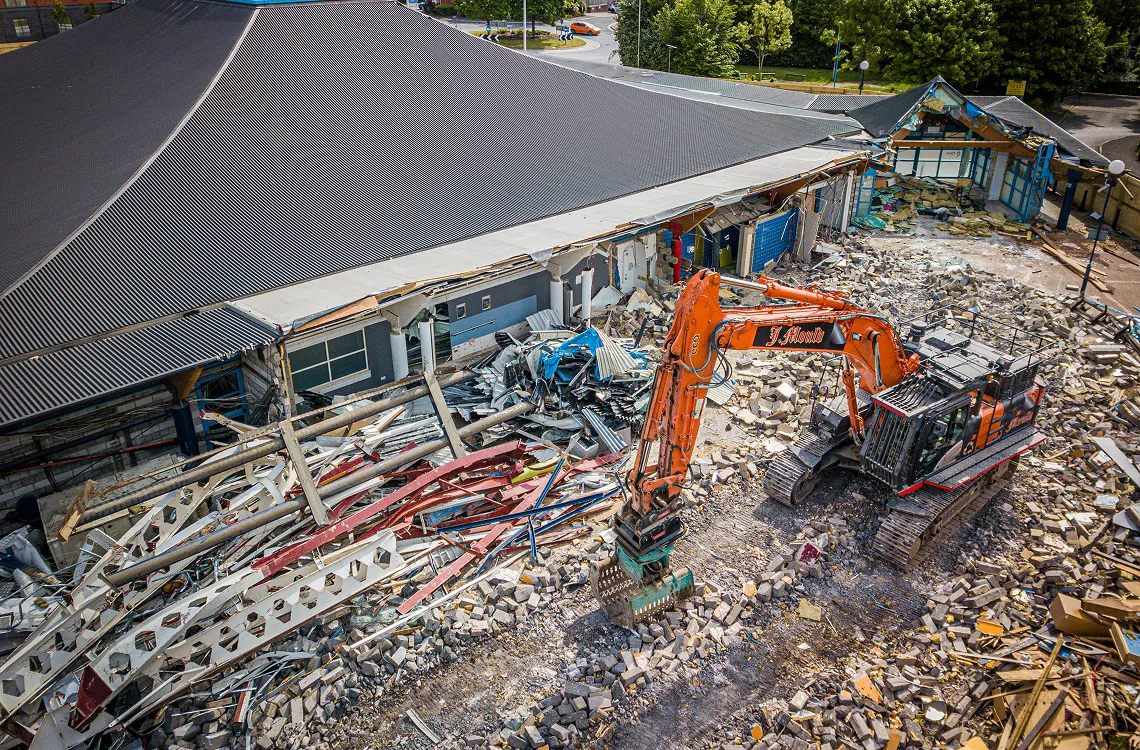
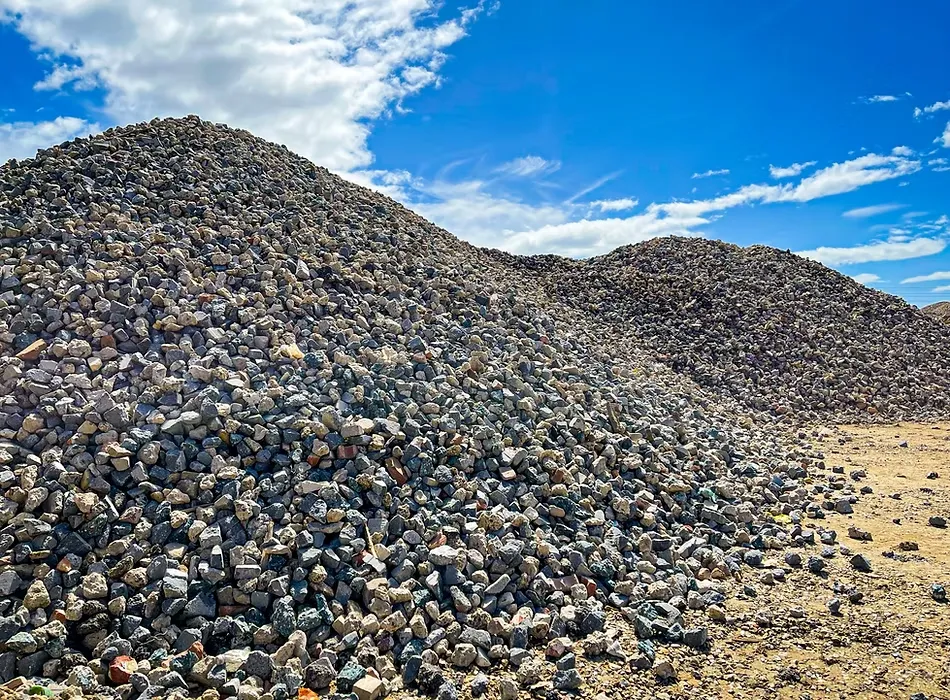
In construction and demolition, true closed-loop recycling is the exception rather than the rule. Most of what gets recycled from a demolition site, concrete, brick, asphalt, doesn’t go back into building new structures as concrete. It gets crushed, screened and turned into aggregate products, sub-base, hardcore, decorative stone, drainage material, used in different projects entirely.
Why Open-Loop Recycling Still Matters
That doesn’t make it a lesser form of recycling. An old office building, once it’s demolished, has no use for its own rubble in its original form, there’s nothing to feed it back into. What it can become is genuinely valuable, aggregate that would otherwise have to come from quarrying virgin material.
Every tonne of recycled aggregate used on a project is a tonne that didn’t need digging out of a quarry, and a tonne of demolition waste that didn’t go to landfill. That’s the real value of construction and demolition recycling, whether or not it technically closes the loop on the original material.
How It Works at Our Site
Demolition waste and skip waste come in, and what comes in as rubble goes back out as graded, usable construction material, produced to the same standards as quarried aggregate:
- Our own Materials Recycling Facility, installed at Reading Quarry in 2018, a £2 million investment
- Everything processed on site, not sent elsewhere to be dealt with
- 98.06% of skip waste recycled right here
- Our washing plant processes up to 200 tonnes an hour
- Material separated into the washed and dry aggregate ranges we supply, everything from fine washed sand to 80mm shingle, Type 1 sub-base to 6F5 crushed hardcore
Closed-Loop or Open-Loop? Being Honest About It
Most of what we recycle is open-loop in the strict sense, demolition waste becoming a different product rather than being fed straight back into identical new construction. We’re not going to claim otherwise. But open-loop recycling done properly, at scale, on your own site, with a verified 98.06% skip waste recycling rate, is still a genuinely circular story.
Nothing here is virgin material with a recycled label slapped on it, and nothing here is waste pretending to be something it’s not.
Why It Matters for Your Project
If you’re specifying aggregate for a construction project, recycled material processed this way:
- Performs to the same standards as quarried alternatives, Type 1, 6F5 and the rest are all produced and tested to the relevant specification, not a lower grade
- Supports your own project’s sustainability credentials
- Helps with your waste management compliance
- Comes without a trade-off on quality
We’ve been family-owned and managed in Reading since 1969, and this is the operation that’s grown out of that time, not a new initiative bolted on. If you’d like to talk through what recycled aggregate could work for your project, get in touch.